
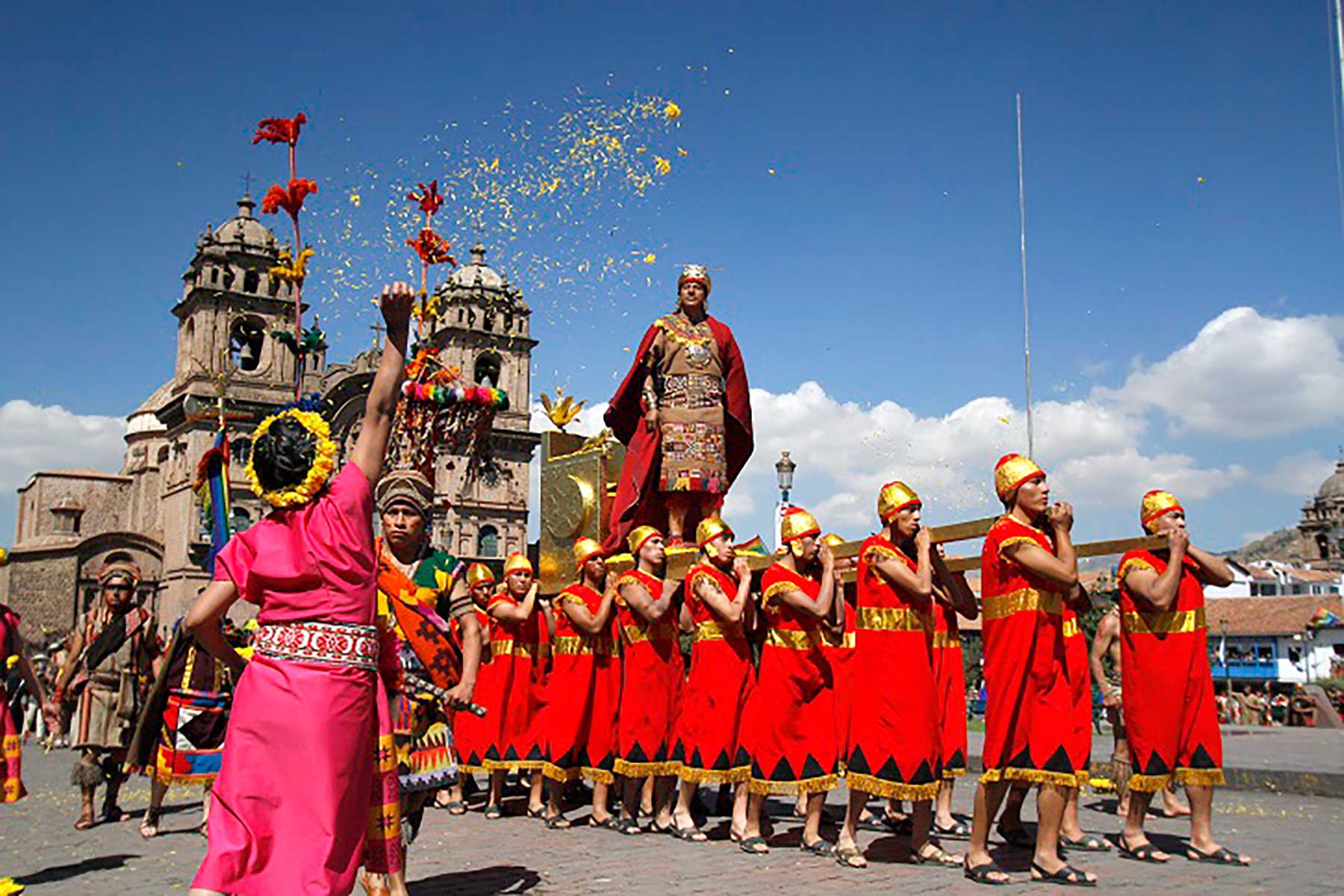
Besides building impressive cities high in the Andes (without cement), the Incas were also known for organizing epic festivals. And Inti Raymi is proof of that. Every June 24th, Cusco transforms into a vibrant stage of color, music, and rituals dedicated to the Sun, the most important god of their civilization.
But make no mistake, this isn’t just a spectacle for tourists. Inti Raymi is an ancestral tradition that remains alive and holds profound meaning for the Andean people. It’s a time of gratitude, renewal, and connection with nature. So, if you’ve ever dreamed of traveling back in time and experiencing the grandeur of the Inca Empire, this is your chance. Are you ready to discover how this grand festival is celebrated? Join me on this journey filled with history, culture, and incredible energy!
What is Inti Raymi?
Inti Raymi, which in Quechua means “Festival of the Sun,” is one of the most important festivals in Andean culture. It is celebrated every June 24th in Cusco, Peru, in honor of the Sun God, the principal deity of the Incas. This event represents the winter solstice in the Southern Hemisphere and marks the beginning of a new agricultural cycle.
History of Inti Raymi
Origin in the Inca Empire
Inti Raymi was established by the Inca Pachacuti in the 15th century as a ceremony to pay tribute to Inti (the Sun) and ask for prosperity for the coming year. During the Inca era, grand festivities were held in the Plaza de Huacaypata (today the Plaza de Armas of Cusco), where the Sapa Inca led the rituals accompanied by the nobility, priests, and the general population.
Prohibition and Resurgence
With the arrival of the Spanish in the 16th century, the celebration was prohibited by the Catholic Church due to its pagan nature. However, the tradition remained alive in indigenous communities and was revived in the 20th century. In 1944, the first modern reenactment of Inti Raymi was organized, becoming the event we know today.
How is Inti Raymi celebrated today?
Today, Inti Raymi is not only one of the most anticipated festivals in Cusco, but also one of the most impressive cultural events in Latin America. It is a theatrical reenactment of ancient Inca rituals, involving hundreds of actors and dancers in traditional costumes. The entire city is filled with music, dances, and ceremonies that transport attendees to the splendor of the Inca Empire.
The celebration takes place in three emblematic locations:
Qorikancha Temple
Inti Raymi begins at Qorikancha, the ancient Temple of the Sun, considered the most important spiritual and religious center of the Inca Empire. Here, on the morning of June 24, the Sapa Inca (portrayed by an actor) emerges accompanied by his retinue, comprised of the Coya (his wife) and the Inca nobility. The first rituals are performed with Quechua songs and traditional dances, while the Inca leads an invocation to the Sun, giving thanks for its light and protection.
At this moment, one of the most symbolic scenes is reenacted: the Inca extends his arms toward the sky and “dialogues” with Inti (the Sun), asking for prosperity for his people. This act is accompanied by Andean music and choreography that evokes the movements of the sun.
Plaza de Armas of Cusco
After the ceremony at Qorikancha, the procession moves to the Plaza de Armas, the heart of colonial and Inca Cusco. In the time of the Inca Empire, this plaza was known as Huacaypata and was the setting where rulers and the people gathered to hear the Inca’s messages.
Here, the Sapa Inca delivers a speech in Quechua, giving thanks for the past harvests and asking for Inti’s blessing for the next agricultural cycle. This moment is accompanied by dances and symbolic performances involving priests and various ethnic groups from the empire, who come to pay homage.
Sacsayhuamán
The grand finale of Inti Raymi takes place at Sacsayhuamán, an imposing Inca fortress located high above Cusco. This is the most anticipated moment of the event, as it is here that the main performance is held with more than 700 actors.
The ceremony at Sacsayhuamán includes various rituals, among them:
Meanwhile, the Sacsayhuamán esplanade fills with the music of quenas and drums, while actors and dancers perform.

